Tuesday, June 21, 2011

Helsingor, Sancta Maria Klosterkirke (Mariakyrkan, St. Mary's Church, Carmelite Cloister)

Skt.. Mariae Klosterkirke
Mariakyrkan
Carmelites

Knock. The Door Opens.

Worship includes Box Seats in balconies, behind screens; 
and Commerce, Is That so? Who matters?


No different from now.

The Ships from the Rafters

Ske. Mariae Klosterkirka, or Saint Mary's Church, Mariakyrkan, and the Carmelite Cloister, Monastery of Our Lady

Wonderful. In Helsingborg, the Town where the Ferry Lands from Sweden.
Go here instead of Kronborg Castle, if you must choose.


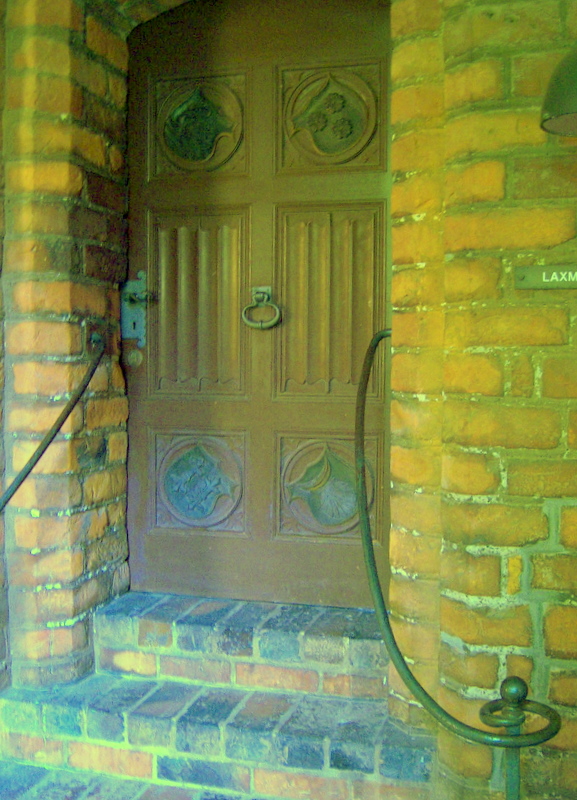
 First, a fabulous little knocker, at the complex of Saint Mary's Church, Mariakyrkan, and the Carmelite Cloister in Helsingor, Denmark.   Helsingborg, similar name, is in Sweden, just a few miles across the water. Take a ferry.

Helsingor is the place of Elsinore, Kronborg Castle, that gets all the attention and has become rather tacky. Even the ticket-takers look and act weary.  Another tourist.  Oh, dear.  Must we bother.

We did Kronborg, as required, but prefer other parts of Denmark's history in this old town, so close to Sweden.   Here is our first encounter: a knocker. We have to look up the symbolism of the pop-eyed dolphin, with a little ersatz cherub without wings on the dolphin's back. The dolphin does not look happy.  A coercive, nasty cherub. Meanwhile, knock and enter.


This is a Carmelite Monastery dating from the 1400's.  Carmelites:  a long history dating from the Crusades and Orders living in Palestine, of hermit-like monastics, but they live in a "shared solitude" see ://www.carmelites.net/tradition/history.html


At the age of 20, Buxtehude became organist here at S. Maria. 


We need a compendium encyclopedia of symbols and patterns.  Doors are fabulous, but what do the shapes mean.


The details are unfamiliar, but the grace is laudable. Look a that curved railing, with the monkey-tail ending.  We used to love sliding down big mahogany bannisters as kids with monkey-tail curlicues at the end to stop you, and here one is. Swoosh better than Nike.


Pulpit, Sancta Maria, Klosterkirka, Helsingor, DK.  

The interesting angle here is all the pregnant women.  There are the usual saints, and Matthew etc., but more interesting are the bulging bellies of the women representing various virtues.  Where to get information on that? Because this is St. Mary's and she was "enceinte"?


Ladies with child representing virtues; not just fashion bulges, to look at them. St. Mary's, Helsingor, DK  Mariakyrkan.

Don't nobody tell the Vatican that these are here.  Look between St. Luke, there and the next gospeler, and see the shapes.  That is real life.  We enlarged it here so you could see.  If you like, if it disturbs you, click on the picture and make it small.


The photo is fuzzed because we are not professional, but look there and see if youoree. That is not a noble, patience.  That is someone under stress.  Thank you, church, for putting her in that position.

.  Mariakyrkan.


In August of each year, Helsingor hosts the Baltic Sail, where ships anchor in the harbor, and there are booths and entertainment and -- is this like the Tall Ships in the US, where towns along old harbors, from NY to the smaller, have celebrations of old ships? 

Note the lovely spiral carved staircase leading to the private worship boxes.


Worship skyboxes. 

In Mariakyrkan, the pews are ornamented with upstanding scallop shells, long the symbol of pilgrims.  See ://seagrant.gso.uri.edu/factsheets/scallop.html/.  The Church is brick, as this is an area with out mountain rocks for building material. 

Back to use of female figures for the Virtues.  Do tell the Vatican.

Helsingor, Hamlet's Grave in the Grove - Tradition, Marienlyst Slot Manor House

Hamlet Grove
Traditional Site, Grave


This is not easy to find.  Park, walk, go back, park again, walk. Up steps, look around, finally find it.  Lovely spot.  A real Hamlet appears in a story by Saxo the Historian about 400 years before the Elizabethan version of William Shakespeare.  A fast overview is at enotes, at ://www.enotes.com/hamlet/historical-background.  Another version appeared in French about 15 years before Shakespear's; then another source comes up, the "Ur-Hamlet", an earlier play performed in England -- see a huge tale of the sources at ://www.pathguy.com/hamlet.htm#historicalhamlet


This is not likely a real grave, but it provides the required reverie site in a romantic garden, and the manor house of the castle is not far. See ://www.lonelyplanet.com/denmark/zealand/helsingor-elsinore/sights/castle/hamlet-s-grave

Now:  what is the creature:  We think a Griffin, see below, but the odd part  of this site is the fact of two different creatures, front and back.


The back of the market does not match the front.  There is no grappling with a snake on the back side.  And the back side creature has front hoofs, like a Pegasus, and there is a small mane, if any.  Now compare the back to the front, different angle slightly. Still can't tell what the animal is. Winged lion for Lion of Denmark, but it looks like a Dragon's tail, clearly male, prominent mane, but paws (it looks like) so is not a horse, and grappling with a snake.


We think Griffin. Not perfect fit, but close. Head and wings, but the head here does not look like an eagle. That is a problem.

Body of lion or tiger, check, and tail of scorpion  The front feet could well be talons.  See ://electricka.com/etaf/muses/mythology/comparative_mythology/fantastic_creatures_of_the_world/fantastic_creatures/fantastic_creatures_table/creature_list.asp?pagesize=50

Helsingor, St. Mary's Cloister Church, Frescoes, Burials, Carmelite Cloister;

St. Mary's
Carmelite Cloister Church

A Sistine of the North -- Medieval Frescoes


Ceiling frescoes:  Here, this fresco shows the Last Supper.  The Last Supper includes a boar's head on the platter.


Boar's head at the Last Supper, St. Mary's Cloister Church, Helsingor DK. Also other scenes:  flight into Egypt, Herod the baby-killer (no outside evidence for that?); a healing?


This specification of pork at the Last Supper will come as a surprise, probably especially to Avraham Ben David.  Yet, lack of awareness of Jewish dietary laws would not be unusual at that time in the context of Jews in Danish history. There were few Jews there at the time.  See FN 1

It is a boar there on the platter. There are the two lower incisor tusks.  No lamb, that.


The detail in the ceiling frescoes, fit in between the arches, is worth oversizing.  To reduce the enlargement, click on the picture.


Turn your computer upside down to see them all. We like these better than Michelangelo's; who is the artist for this Sistine of the North?


The frescoes date from 1400-1525.  See ://atasteofdenmark.blogspot.com/2010/05/elsinorehelsingr-and-kronborg.html


This is not the Frederick II, he redid Kronborg Castle from a fortress to be his matrimonial home. See ://www.virtualtourist.com/travel/Europe/Denmark/Frederiksborg_Amt/Helsingoer-163074/Things_To_Do-Helsingoer-TG-C-1.html/  Not fancy enough to be a King's burial place.  Have to check. who this one is.


...........................................
FN 1.  Pork at the Last Supper.  Boar at the Last Supper. At a Jewish repast?  Easily understood:

The frescoes date from the 1400's to early and mid 1500's.  There may have been individual families or groups of Jews in Denmark at the time, but it was not until Christian IV established a formal connection with Jews, inviting Sephardic Jews to settle in Denmark to fill important roles there, and enjoy financial privileges.  They they were welcomed and prospered.  In 1605, a royal letter of protection issued as to the Jews. The Danes on their own were not competing well with other parts of Europe, especially mighty Hamburg,  in imports and exports, and many Jews of the time had superior educations and practical experience in finance and administration.  See The History of the Jews in Denmark at ://www.jewishgen.org/scandinavia/history.htm/.  Since "Christians" were forbidden to be "usurious" (charge interest), they simply passed on that area of commercial life to others; then later condemned Jews for doing it -- yet that was one of the only economic areas where a Jew could even earn a living in the broader community. 


Since then, usury is a big Christian business.  As to the Last Supper, we understand that wine and bread would be served between other courses, and would not be a "supper" in itself.  If boar is in Danish woods, and used for fine dinners, then boar it is.

Monday, June 20, 2011

Helsingor - Ferry from Helsingborg, Sweden

Helsingor from Helsingborg

Tourist confusion comes from Helsingborg, Helsingor, Kronborg and Elsinore.

Crib sheet:

Town of Helsingborg  = Sweden.
Town of Helsingor      = Denmark.
Castle Kronborg          = Denmark; Kronborg Castle is located just outside Helsingor
Castle Elsinore            = Shakespeare's vision of an old Kronborg

These are separated by about 20 minutes of car-ferry ride, or 4 km, or perhaps 2 3/4 miles, see http://www.users.dircon.co.uk/~highrise/deptlads/cph99/kronborg.htm.  No reservations are needed.  Just drive up to the pay window. There is time to get out if you like, for the view and breezes. Get back fast, so the lines behind your car are not held up.


The waterway is known as the Oresund. Shipping from the Kattegat to the Baltic, on the way to the North Sea passes through here, and the original Kronborg site was more a customs post than a defensive castle at the time. It is at the narrowest point between Denmark and Sweden.

From the middle of the Oresund, in the distance, there is the castle-residential palace, Kronborg. Kronborg was dubbed Elsinore in Shakespeare's Hamlet. The real Hamlet lived centuries before this fine, elaborate structure.


Helsingor has its own history, too often overlooked. We enjoyed it more than overworked Kronborg.

Friday, December 31, 2010

Amleth or Hamlet. Events at Jutland. Sonderborg? Certainly not Zealand; at Kronborg. Vet the idea.

 Hamlet was a Jute

Shakespeare finds plot lines in many other sources.  Hamlet came from the Amleth of Saxo Grammaticus, or later other sources referring to Saxo.  Saxo who wrote 'chronicles' of Danish "history".  In Saxo, Hamlet, or Amleth, was by specific reference from Jutland.

Hamlet, if he was from Jutland,  was a Jute.

A Jutish person. Jutland.  Jute tribe.  See their role, and participation in invasion of Great Britain along with the Angles and Saxons, at http://www.bbc.co.uk/dna/h2g2/A22550753.
Shakespeare never sited his castle, except to say "Denmark," (is that so?  still looking).  That seeming clear, see below, it is time to move the ersatz Hamlet grave stone (hokey) to Jutland,  somewhere.  Where? So far, we vote for Sonderborg, Jutland, Denmark,

MOVE HAMLET BACK TO JUTLAND

If this is so, despite popular hearsay support for Kronborg Castle in Zealand, Denmark, being "the castle", we must move Hamlet's commemorative stone.  Get the van and take it from the so-called Hamlet's Grove, Helsingor, Zealand; near Kronborg.  We must move it to somewhere in Jutland. But where?

Where on Jutland shall we take it?


  • First, why must we move it?
We must move it because it is in the wrong place.

Kronborg, or Elsinore, on Zealand, was not the setting for the "real" Hamlet of Shakespeare. It is only said that Kronborg Castle inspired a setting for Shakespeare's Hamlet, as it was an admired Renaissance construction-du-jour, see http://www.guide-to-castles-of-europe.com/kronborg-castle.html.

We are looking for any evidence that Shakespeare actually had Kronborg in mind.  Let us know if you find it.  Kronborg was insignificant in location. It was built in 1420 as a small fort for tolls on the Oresund (Sweden was just across by a few miles), then expanded in the late 1500's to be glamorous, by Frederik II.  There was no prior history of a "castle" on the Kronborg site at the time that Hamlet was sited, as far as we can find.

Outside the box.  Sonderborg site.

Why is it not equally feasible that Shakespeare used Sonderborg Castle, which is actually on Jutland, as Saxo provided, as his inspiration.

No one minds representing Kronborg as inspiring Shakespeare, because that is what tourism does.  But where is the information.  Look for any documentation that Shakespeare himself thought "Kronborg."  With that failing (will it?) can we also let the tourist industry say that our Hamlet is indeed here, buried, as well?

Hamlet's grove.  For the gullible.
  • Second, we need to move it because the earliest sources are far from Denmark.  
  • The earliest sources appear to be Icelandic Sagas, with mythical elements. 
  • That leaves the issue:  Why site Hamlet at Kronborg.  Site it in Jutland, somewhere, and so far the best candidate, for location, strategy, royalty, intrigue, is Valdemar II's Sonderborg site.

1. Hamlet for Shakespeare, if he read Saxo (as he appears to have done, to get the story and crib it) had to know that the events were sited by Saxo in Jutland.

The original Hamlet story (the story farthest back we can find, that does not mean historical actual single figure, is an Amleth figure), puts a similar story in Icelandic sagas, and mythological.


So despite the humanity in the events, responses, interactions:  there was probably no specific Hamlet for Saxo and then Shakespeare.  Rather, perhaps a conglomeration, cultural baloney if you will,  happened, as best its events can be referenced, but in Jutland as to Saxo, not Zealand as to the tourist industry.  See http://denmarkroadways.blogspot.com/2010/09/sonderborg-jutlands-last-stand-castle.html

There are also events between Kings and marriages and events in Britain, Scotland, Germany areas in the Hamlet story, and a range of events far exceeding and differing from the Shakespeare focus, but it was Jutland for the main events of the story. See
a.  Saxo.  Page 139.  In the Saxo tale, Hamlet goes to Britain, then returns (all emphases for Jutland added)

"On reaching Jutland, he (Amleth or Hamlet) exchanged is present attire for his ancient demeanor, which he had adopted for righteous ends, purposely assuming an aspect of absurdity." 

 The same reference to Jutland is found in the Ashliman translation, so we did a "find" thereafter and found other examples. Jutland. But a "find" cannot be done easily in the Saxo, so will wait to specifically find each of these from the Ashliman:

b.  Ashliman.  King Wiglek, who succeeded King Rorik over all Denmark, accused Hamlet of usurping the Kingdom of Jutland.

c.  Ashliman.  Eventually Wiglek slays Amleth in battle in Jutland

d.  Ashliman.  And "a plain in Jutland is to be found, famous for his name and burial place."

2.  When in Jutland, for the inspiration of Shakespeare and corroboration for Saxo?

Look for a historical fortress-siege-castle-site, that evolved over time from Hamlet's era.  What is the year of Amleth? The story did not originate with Saxo with his writing in 1185.

Look back to Icelandic Sagas, 900 or so? See http://www.1911encyclopedia.org/Hamlet

There are more primordial resemblances back to early civilizations, see a 1911 Encyclopedia Britannica, at  http://books.google.com/books?id=GFAEAAAAYAAJ&pg=PA895&lpg=PA895&dq=Amleth+Icelandic+saga&source=bl&ots=2IC2BbbTwH&sig=IfPcNdnDUlaiocJYLgvaMjndGYg&hl=en&ei=fYkLTsrZEorHgAfRm8SiAg&sa=X&oi=book_result&ct=result&resnum=1&ved=0CB4Q6AEwAA#v=onepage&q=Amleth%20Icelandic%20saga&f=false

So it seems clear that the really, really original "Hamlet" archetype is not definable by Scandinavian sources.

The events in the story may help.  The end of the Viking age is said at this site to be when Haraldr was defeated in Britain, and the Saxo story has Hamlet in Britain (after feigning madness at home at the suspicion of the murder of his father), marrying there, and also marrying a Scottish queen (and bringing them both back to Denmark apparently, see Saxo).

That would indeed put the story after the Viking age, and about the time of Valdemar, a little earlier perhaps? See p.266 generally, at http://books.google.com/books?id=d-XiZO8V4qUC&pg=PA266&lpg=PA266&dq=royal+seat+medieval+denmark&source=bl&ots=buJfum40OD&sig=Xj4wk4MvM9qMuP47rezSTFbgWDA&hl=en&ei=3m0LTtDQGoXQgAe8soiOAg&sa=X&oi=book_result&ct=result&resnum=5&sqi=2&ved=0CDQQ6AEwBA#v=onepage&q=royal%20seat%20medieval%20denmark&f=false\

 3.  Where in Jutland?

Weigh Sonderborg.

Con.

One problem is that it is on an island, Als Island.  It passed to Germany in the 1860's, then back to Denmark in the 1920's; and straddles both sides of the Sound. See http://www.britannica.com/EBchecked/topic/17393/Als

Pro.  The water distance is small, however; and would have been an easy ferry ride over.  By now, of course, it is connected by full roads.  And the water is a plus:  Amleth walks the beach, finds the rudder of a shipwreck, see page 109 at Saxo, by Frederick York Powell

Default.  Where else is there on Jutland, but a place with proximity to Britain and events at the close of the Viking era:  Medieval Sondeborg Slot, Sonderborg Castle, Soenderborg; we are looking for drawings of the castle before the Renaissance changes. Is Viborg in the running, founded 1000, see http://www.ambwarszawa.um.dk/NR/rdonlyres/39B0DE26-EB74-442B-A14C-8015D37D55D0/0/WelcometoViborgthegreenheartofJutland.pdf

Look closer at Sonderborg as a site:
Valdemar, first substantial builder, but the area has been populated since the Stone Age. Start with Valdemar, biography at http://medievaldanishfamilies.blogspot.com/2010/05/valdemar-i-great-1131-82-sophie-of.html . He built several towers, as defenses against the Wends. See medieval tower uses, living quarters upstairs, a prison perhaps, at http://www.medieval-castle.com/plans_towers_keeps.htm

  • And there is a plain, a battle plain, just west of Sonderborg itself at Dybbol, that is the site of other battles, including civil wars, wars with Germany over Schleswig-Holstein, etc. 
Battle plain, Dybbol, near Sonderborg DK
Written sources cite Sonderborg in 1256. See Graensforningen.dk at (click to translate) http://www.graenseforeningen.dk/artikel/3567/

Digging.


We will look there.

c.  However, there are other options. Still looking. Need bones. Off to Iceland.


.................................................................................

*   We need a reference, a comparison, because Sonderborg does not have the websites we are looking for: its archeological history, overall map.  Bergenhus in Norway looks very like Sonderborg - read the progression of uses, incorporation of the old medieval tower, he entry into the medieval castle, into a bigger tower, and uniting all the function buildings.  See http://www.forsvarsbygg.no/Documents/Festningene/Festningsl%C3%B8ypene/Festningsl%C3%B8ypa%20Bergenhus%20_engelsk.pdf

So how the complex looks now, is not what it was as an original medieval construct.

Other medieval royal seats in Denmark:  near Roskilde, Lieth (that is on Zealand where Kronborg is); or old Arhus.

Sonderborg - Jutland's Last Stand. The Castle, The Fortress. Hamlet?


Sonderborg, DK; Jutland's Last Stand
Soenderborg

This 13th Century Castle, refurbished later as a Renaissance fortress, is out on a peninsula, an island called Als, off the regular track. It is now well connected by motorway, and the earlier ferry across the small width of the sound (Sonderborg straddles it) would not be much hindrance. Sonderborg is less "interfered with" than other castles more on the mainland, that are refurbished for commercial reasons.

Civil War.  World War.  Hearts and bodies were broken here, or near here. Just off the big peninsula where the fortress here is located (its island is out at the end of a peninsula), is the border of Teutonic Germanic tribes and the Norse, back and forth, back and forth. It dates from the 1200's, was remodeled as a Renaissance castle in 1550-1570, and commemorates numerous wars or related events:
  • 1848-1850;
  • 1864; and
  • 1914-1918; and
  • the referendum of 1920 by which substantial territory of Schleswig-Holstein, taken by the Germans earlier; remained German. Too much time had passed, and identities shifted. See ://www.sologstrand.com/holiday-denmark/museums/south-east-jutland/soenderborg-museum.htm/
 Denmark's land after those battles, once vast and including at one time parts of Sweden and even Norway, and Northern Germany, remained vastly reduced. Empires. Temporary.

    Mighty  Sonderborg today.  See how Sonderborg is presented, however: a nice family outing. See ://ezinearticles.com/?Visit-Sonderborg-Denmark---Southern-Jutland&id=3483051/

    The more we let pass the guts of history and the inevitable passing of empires, the less we can learn. Go there. Don't read about it. The Castle, Sonderborg Slot, now a museum, has been at the center of territorial conflict for 800 years.

    In 1864,the Germanics (Prussians?) to the south claimed land that Denmark had dominated for years; and in a fierce war, Denmark lost most of its area in Southern Jutland, south of the line beginning roughly where Sonderborg lies (think latitude here) in the Battle of Dybbol, against the Teutonic (Prussian) armies from the south. Schleswig-Holstein area at war.

    Sonderborg Castle, Denmark. Exterior

    Germany occupied that land thereafter, for some 56 years. Finally, as late as 1920, there was a referendum about where the land should tilt: to the Norse or the Teutonic, after all the centuries of back and forth; and the Teutons won. By that time, after 56 years of German occupation, the die had been cast. It pays to invade and take and hold long enough. Too late to undo. Is that so?

    This fortress, garrison town, was the place of alliances, then civil war as the Teutonics sought to sever from the Danes, and back and forth and back and forth. What is the destiny of places and people without a natural boundary to hide behind, as each and the other invaded trying to gain advantage. Like Poland, the absence of natural boundary means back and forth, back and forth.

    Sonderborg. Out on a peninsula, a natural visit for people heading south after Horsens and the rest of Jutland. But apart. with its own battlefields, its own series of deaths.

    Because it is off the usual tourist path, however, it has preserved elements in its fortress-castle-chapel that may otherwise have been ripped apart with new takers.

    Take time to go to Sonderborg. First, the civil war, with the more Germanic tilting group vs the Danes, then the second installment, where the Prussians from the Teutonic side joined in with their military might, and overcame the outnumbered Danes. The Danish fight to retain their territory is still revered: the bravery, if not the victory. It sounds like our South: the bravery revered, the victory lost; but in Denmark, there was no countervailing moral principle of slavery to be overcome. Just turf, and conquest, so it seems to this tourist.

    Sonderborg Castle, courtyard, DK

    Brick fortress architecture. No mountains for rocks, boulders, stone masons to ply their trade. Cobbles, but then brick and brick. Over the years as needs changed, so did architecture: but always, the brick.

    The Castle, the Fortess, is now a museum.


    Sonderborg, DK. The view.

    Saturday, December 25, 2010

    Schleswig Holstein area: Danewerk. Danes' Rampart. Dannewerk. Defend Against Charlemagne and Christians

    Routing:

    Schleswig-Holstein
    German-Dane border
    Land lost to Germany in Danish Civil War 19th Century


    A.  Route

    A circle trip in Scandinavia for us meant flexibility in timing.  We had no idea what time we would want there.  We traveled in four stages:

    1.  Denmark.  First line through Denmark, starting at Copenhagen; drove through Odense and over to Jutland, then south to Germany.

    2.  Germany. Second line through Northern Germany, to the ferry at Rostock; and then the overnight ferry from Rostock to Trelleborg, Sweden.

    3.  Sweden.  Third line from Trellenborg around Kalman and up to Vaxjo, over to Stockholm, and across back through Kinnekulle to Goteborg, and the ferry from Helsingborg, Sweden, to Helsingor, Denmark.

    4.  Denmark again. Fourth line became a loop.  With some days still available, we filled in with the rest of Denmark that we missed on the first loop. Kronborg and Northern Denmark, through Copenhagen, do another loop to Jutland and back, and back north for more, and then to the Copenhagen airport.

    B.  Schleswig Holstein:  Part of Denmark for centuries. A flat drive.  There would be nothing to stop an invading army.

    It was here that Denmark blocked Charlemagne and successors, held back the "Holy" Roman Empire with constructed bulwarks, see http://encyclopedia.jrank.org/DAH_DEM/DANNEWERK_or_DANEWERK_Danish_Da.html

    What difference did it make to Danish development, that it was in the direct line of invasions, including religious.
    • All Norse are not alike.  Sweden's history, and its Vikings, seem different from those of Denmark and even Norway.  
    • Geography holds clues.  Denmark is connected by land to the lands of the Germanic tribes being conquered by Charlemagne; they could see what was happening as the Christians moved north. Sweden was never threatened by Charlemagne; Christian proselytizing took place more peacably.
    Christians on the march to Scandinavia, and elsewhere.  Was it really "belief" or was it a baser motivation, power and territory? Was it both.

    One viewpoint:

    Christians had no easy path in converting the pagan Norse (why the pejorative? we prefer multi-deists, a more neutral, respectful category).

    But the Christians were "backed by the power, wealth and army of Rome". The Roman church for centuries had been buying, selling, inheriting lands and wealth. See an unsympathetic view at  http://idrisi.narod.ru/volvewitch.htm/ Is there merit to the viewpoint.

    Charlemagne, not touted as ethereal but for his actions as a "Vatican warlord" (new slant) in killing and making war, refugees streaming, but never got to Denmark. Danes were alert, seeing him in Saxony (see Germany Road Ways, post on Sachsenhain, near Verden. The Danes blocked their roads, and then responded:  attacks on the Roman Church outposts, like Lindisfarne in 793 AD. 

    The rampart of Jutland. It worked, for a time.

    Thursday, November 18, 2010

    Horsens - Medieval Jousts. Some ponytails.

    Medieval competition reenactments: these are common in other places in Europe, and the United States; but there is special fun in seeing Viking country get all jousted up.

    Did Vikings really do that? Somehow the concepts of chivalry, and the gradations from page to squire to knight and all that are too orderly for these folk. Instead, were they in their longboats, and with battleaxes, fighting back at the encroaching and violent Christians and their forced religion, including Charlemagne beating at the Saxon doors not far south. See Western Ethnic Violence Timeline/

    Not sure. So enjoy the joust.


    And a lady jouster with pony tail. 


    Women in armor.  Not unusual then.  See Switzerland Road Ways, Thun Castle; and also at Chillon,  Switzerland.  And Italian accounts of female Military Orders .  We looked that up once, will find.  Try Spain Road Ways, or perhaps Italy Road Ways of ours.


    Friday, November 5, 2010

    Horsens - European Medieval Festival - Prep Day

    Horsens
    Medieval Action Town Once a Year

    The town of Horsens hosts a European Medieval Festival annually, known for its crowds of enthusiastic would-be's and their retainers.  Come to Jutland. At Middelalder.


    See it at ://www.worldtravelguide.net/denmark/horsens-european-medieval-festival/  The advantage to this festival is that it comes at the end of the summer, a time to suit the nonconformist visitor. Midsummer has enough. This event relies largely on the benevolences begun by philanthropists like Christian Daniel Danjelsen.


    Christian Daniel Danjelsen, 1842-1921. He was a Barrister who, with his wife, set up a large charitable trust for the "embellishment' of the town of Horsens.  See Christian Daniel Danjelsen, benefactor, ebook. Here is Mr. Danjelsen, the one on the left. Admire the mustache. The gentleman on the right is another Daniel, pleased at the name. 


    We tried to schedule our time to be there on The Day, but arrived early when all was being set up. The festival is in the city, on a large open space, but parking still is difficult.  And pricey.  Early arrivals:  strolling, chances to talk.

    Horsens Medieval Fair, Horsens, DK.  Picnic grounds, fast food or BYO.


    There was 20 minutes to go before the official jousting rehearsal in the arena -- saunter around.


    Scandinavia has a sense of design in places we usually ignore. How very tasteful is the wicker.


    So:  The Grounds are Ready.  Now:  to the Games. For a preview, see

    Monday, November 1, 2010

    Silkeborg: Ask for a Conference Center. Surprise.

    Arriving late to most places, as we do, is risky. And with dark, comes fatigue. There be boars out there. So, take what you can get.


    Here, we lucked out.  Note the ingenious parking arrangement. Up-end granite bricks, leave spaces in between let the grass grow green.  Virtually invisible from a distance, easy upkeep. No mud. 


    Our cottage, conference center for the night, Silkeborg DK
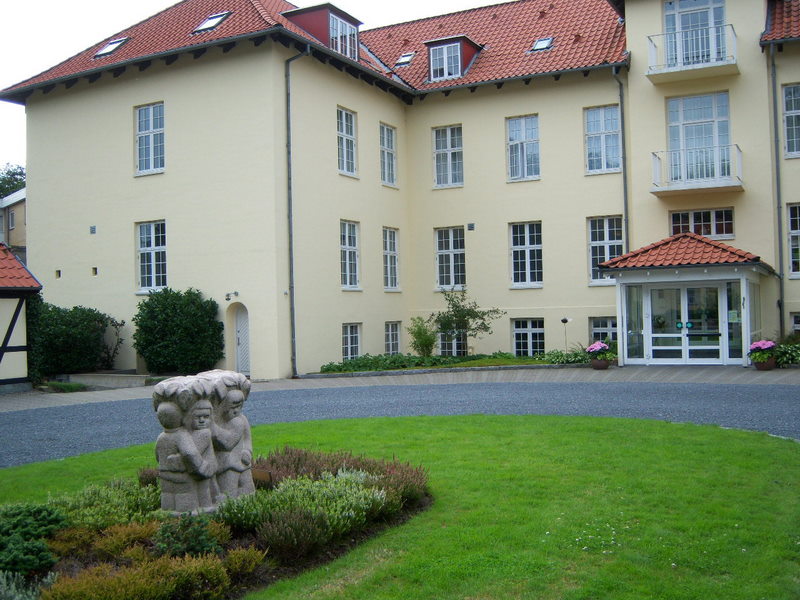

    Whimsy in Scandinavia. Watch for the statues, Silkeborg, DK

    And the one-tap necessary.  Here is an economical arrangement:  one set of taps, at the sink.  Just flip the toggle over there and the shower starts over here. And no rims, just a measly curtain, no partition,  just everything tilting down to the center drain.


    That's just a hand-hold over there, where the shower hose is, so you don't slip and fall on your necessary.