The history of Jelling encapsulates the history of conversion of the Danes to Christianity, and it was a rocky road. Worth it? Minds vary. What drove the work: How many parts force, repeated? A hundredfold. How many parts gospel by example, love etc., zip. Maybe
one.
Find Harald Bluetooth I, in a far broader historical context, at
Bogomilia: Harald Bluetooth I. Find a timeline to put Vikings into perspective as to violences. This is a World Heritage Site, see ://www.worldheritagesite.org/sites/jellingmounds.html
Here is the cast of characters at Jelling, Denmark: Denmark coming under siege again against the new perceived successor to the earlier aggressor, Charlemagne: Here, Otto, who picked up the banner against the Norse after Charlemagne's empire fell apart: first, Gorm the Old, Viking King, pagan tradition. His wife, Thyra. When Thyra died, Gorm erected a rune stone in her honor. Their son is the one who impacts back and forth with Otto -- Bluetooth.
This side says "Denmark". The reverse says "Gorm King made these memories after Thyra his wife Denmark's ornament", according to the translation at ://www.fortidensjelling.dk/jellinge4.htm/ Read there of her strengths in enlarging the ramparts known as the Dannevirke, and persistence in defending Denmark, against Otto and the Germanic tribes. And against Otto's own advances. In 1627, the stone sat next to the church entrance, and was used as a seat. Then moved.
Gorm died in about 958 ACE, and was buried in the Viking tradition, in a burial mound. Here is the north mound where he was buried:
Do we have the mounds straight? There are conflicting accounts: is Thyra in the center of the old stone ship construct, or was she in the mound, now emptied (grave robbers). See ://vikingheritage.eu/vikingheritage/23.jelling.html/; and then that one body was recovered, was that Gorm? ://www.adenmarkattraction.com/denmark-attractions/viking-burial-mounds.htmw Have to keep checking. Some say the South Mound never did contain a body and that it was intended by Harald Bluetooth for himself. That would put the Queen Mother in the stone ship between, now where the church is located. Is that so?
Harald Bluetooth finally is converted to Christianity, and built a church on the same site as the Gorm the Old burial mound; and also the site of a large stone ship -- the outline of a Viking ship in spaced standing stones, usually signifying a burial place at the center. It is believed by some that Queen Thyra was buried in that place. Building the church over it blends the pagan with the Christian, and also puts Thyra in "hallowed" ground.
Harald also reburied his father in the church. That church burned, as did its succcessor, and another was built. There are three clear sections to the church, but go in and only find access to two. Go inside and get disoriented. Which room are you in? An added entryway is clear enough, but the inner space is nothing like the outside suggests.
The oldest part is reinforced. But inaccessible. Little window 'way up top. What is in there?
Little window on the other side, at human level. Is that the altar end? False ceiling? There was a vestry meeting going on inside, so we fiddled around outside most. Find details of the church at
http://www.fortidensjelling.dk/jellinge7.htm/
Interior: here is the menorah form for the candelabra. This frequently shown in Danish churches.
In 2000, after confirming identity, Gorm was reburied beneath the new church, in front of the choir, with just a little symbol there that has no other marking and we missed it, found it here: See ://www.fortidensjelling.dk/jellinge4.htm/
Harald Bluetooth, son of Gorm and Thyra, set up a 10-ton pyramidal rune stone in honor of his father and mother both.
It looks different from each angle.
There are Christ symbols, and Christian symbols. The figure of Christ on Side 2 is the oldest representation of Christ in Denmark. See it more clearly in the paint that would have been used at the time, at ://www.fortidensjelling.dk/jellinge5.htm/
 Side 3, animals and snake, Rune stone, Harald Bluetooth for King Gorm and Queen Thyra
Harald ultimately was deposed by his son, Sven, and fled to Poland we think. There he dumped Christianity (is never canonized by the Church; but is given a prominent place and may be buried at Roskilde Cathedral).
Why a clipper ship hanging from the ceiling? The motif is common in Danish churches. Need research. Is this a clipper?
A third great stone honors a wife of Harald Bluetooth, apparently.
Was it the theology of Christianity that moved the Scandinavians, or force and organization backed by assets and means of communication: Charlemagne and successors pressing on.
Think back: Christians had the advantage of literacy; and traditions of keeping records and illustrating and writing stories. And the power and the military of the Pope. The Vikings had little of that, in their largely oral tradition, and mustering armies as needed. Literacy and communications: Even Gorm's rune stone for Thyra is the first known recorded words of a Danish king.
Like corporations against individuals: guess who wins. Guess who can muster more resources, and more varied resources.
Still, after decades, even hundreds of years of people saying they converted to get the Christians off their backs, and then returning to their own views; some stuck. Then more, and it all then stuck and the Viking culture was diminished in the historical view to a brief, regrettable few centuries of unexplained violence.
For more of the Builder's work, see Harald Bluetooth's Bridge over Ravning Enge, at Velje, see ://jelling.natmus.dk/om_projektet/delprojekter/broen_over_ravning_enge/language/uk/ Half a mile long, 18 feet wide.
 length of the lance, joust, Horsens, Denmark
 Ladies judge the skills, Horsens Medieval Festival, Denmark
 Distances must be measured for safety, Medieval Festival Horsens, Denmark
 Horse charge too close. Run. Medieval Festival, rehearsal day, Horsens, DK
 Knight with blonde pony-tail, a lady in armor. Why are you surprised? Horsens Medieval Festival, Horsens, DK
 The next charge starts, buppity bupp, Horsens Medieval Festiva, DK
 Horses charging down the divided track, competitor coming at you, one after another, Horsens DK, medieval re-enactment
 Longest lance, Medieval Joust Festival, Horsens, DK
 Favorite tree: Ginkgo, Horsens, DK.
 Horsens Medieval Fair, poster, Horsens, Denmark
 Daniel Widing with benefactorof similar name, memorial for Christian Daniel Danjelsen, Horsens cultural community, Denmark
 Horsens European Medieval Festival, family life
 Horsens Medieval Fair, Horsens, DK. Picnic grounds, fast food or BYO.
  Horsens Medieval Fair, Horsens, DK. Down time.
 Daniel Widing spies a chink, as in Shakespeare Pyramus and Thisbe? Horsens, Denmark
 Dan Widing meets a troubadour, Horsens Medieval Festival, Denmark
 The necessary. Detail at the fair. Horsens DK with appropriate aesthetic privacy screening for the row, Horsens Fair, Denmark
 Boar, Silkeborg Museum, DK
 Parking design, granite and grass, Silkeborg, DK
 Our cottage, conference center for the night, Silkeborg DK
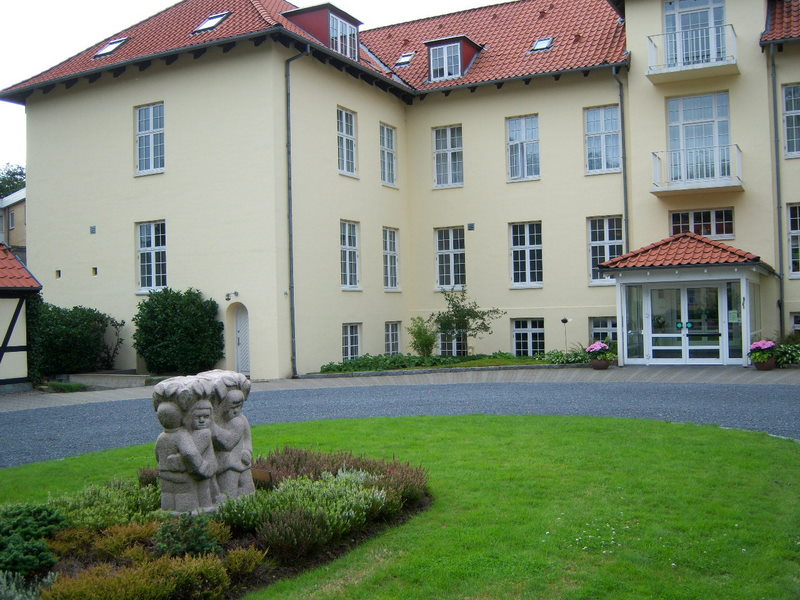 Whimsy in Scandinavia. Watch for the statues, Silkeborg, DK
 The one-tap necessary.
 Chef, Mongolian Barbeque, Silkeborg, Denmark
 Mongolian Barbecue Restaurant, Silkeborg, DK
 Silkeborg, DK. Mongolian Barbecue Restaurant
 Ingredients bar, Mongolian Barbecue Restaurant, Silkeborg
 Sauce, veggie, meat and fish bar, and spices, Oriental restaurant, Denmark
 Tollund Man, Silkeborg DK, rear head view. Early Iron Age.
 Tollund Man, Silkeborg Museum, preserved in acidity of bog, showing curled position
 Tollund Man (Bog Man), Silkeborg, Denmark, facial close-up
 Recreated setting, location of Tolland Man in peat bog 1950, Silkeborg DK Museum
 Bog man, Tollund Man, full body rear view, Silkeborg DK
 Silkeborg, Denmark Museum. Tollund Man, frontal side view
 Tollund man, 350 BC death, Silkeborg DK
 Cauldron, Iron Age, Silkeborg Museum, DK
 Rune stone, King Gorm for Queen Thyra, Jelling DK
 North Mound, empty: King Gorm's remains reinterred beneath later church)Jelling, Denmark
 South Mound, no body, Jelling, D K
 North Mound, original burial King Gorm, with stones reset (from stone ship of standing stones) at Jelling, DK
 Jelling Church
 Jelling Church
 Interior, Jelling Church, DK
 Side 1, Christ figure, Rune Stone, Harald Bluetooth for King Gorm and Queen Thyra
 Side 2, Lettering, Harald Bluetooth rune stone erected for his father and mother, King Gorm, Queen Thyra
 Side 3, animals and snake, Rune stone, Harald Bluetooth for King Gorm and Queen Thyra
 Suspended clipper ship, Jelling Church, Denmark
 Rune stone honoring a wife of Harald Bluetooth (brought here from nearby), Jelling, DK
 Jelling Church, exterior, Jelling, Denmark
 Mass grave, soldiers, Trinity Church, Fredericia (Trinitatis Kirke)
 Tomb of the Unknown Soldier, Fredericia, Denmark c.1848-50 Schleswig-Holstein War