AAAA-aaa-mmmm-le-e-e-e-eth ---
AAAA-aaa-mmmm-le-e-e-e-eth ---
Amleth!
Amleth!
It hasn't the same ring.
Would that name have echoed through the ages.
We looked up the origins of the Hamlet story, and found some historical-myth-sounding roots, and changes to fit agendas of the tellers of the tale through the years. Kronborg Castle is said to be the inspiration for Shakespeare's Elsinore, and for that reason alone is worth a closer look at it and the play. Entertain the idea that the actual inspiration was from the castle at the time at Sonderborg, Jutland, now much Renaissanced. See http://denmarkroadways.blogspot.com/2011/06/amleth-hamlet-at-jutland-sonderborg-not.html
 William Shakespeare, Commemorative Plaque, Kronborg Castle DK
Hamlet story's original setting for Saxo, however, was in Jutland, not Zealand where Kronborg is located. See http://denmarkroadways.blogspot.com/2011/06/amleth-hamlet-at-jutland-sonderborg-not.html
- Remember that there is no positive evidence for an actual Jutish Prince, a Jute, Jutland, a real Amleth, and the earliest story could have come from myth, from Iceland, see Saxo, First Nine Books of Danish History at page 402 at http://books.google.com/books?id=-bYZAAAAYAAJ&pg=PR3#v=onepage&q&f=false
- Myth? The site examines the Icelandic story, and there are elements of the non-human there. There is also something called the Hrolfssaga, with story parts like the later Hamlet.
Our focus is not on a "historical" Hamlet, but whether Kronborg deserves credit as the location for Shakespeare's story. He knew Saxo, probably, and Saxo said Jutland.
Perhaps Kronborg Castle could stress more that Kronborg is only an "inspiration" to an absent author; that we find no specific Hamlet; and that Saxo drew his "inspiration" from Icelandic and other myth.
I. First, become familiar with Denmark's geography.
What is the difference between Zealand, where Kronborg is located, and Jutland, where Saxo places Amleth. Denmark est omnis divisa in partes tres.
- Section 1. Jutland, where the original events apparently occurred, is the west, the peninsula portion of Denmark, attached to Schleswig-Holstein, then part of Denmark, but now part of Germany.
- Section 2. Zealand, where Kronborg Castle and Shakespeare's Elsinore derived from it, is located, is the east, the large island across from Sweden, on the Oresund waterway. Both Kronborg and Copenhagen are located on Zealand.
- Section 3. Fyn, or Funen, is the center portion, the smaller island, and is not part of the Hamlet tale.
And many, many other clusters of islands.
How to find out if Shakespeare knew Sonderborg Castle. Sources often just state conclusively that he used Kronborg as the basis for Elsinore, see for example http://www.hamletregained.com/hamletwiki/index.php?title=Time_Period
Why would Sonderborg instead not be the real inspiration for Elsinore. Sonderborg's ramparts, ghosts.
Did Shakespeare say he used Kronborg as his location? It was not completed until 1585; Sonderborg had the longer history. See http://www.hamletregained.com/hamletwiki/index.php?title=Time_Period
"Amleth-Hamlet'" for Saxo could not have taken place at Kronborg because it was not built until 1490; and Saxo specifies "Jutland". Saxo wrote in 1185. Sonderborg was built in 1260 or so.
 Sonderborg, naval defenses
Sonderborg, then, would place it geographically accurately, on Jutland (see Saxo), and the castle there is on the water and every bit - if not more - historical. See it at http://denmarkroadways.blogspot.com/2010/12/sonderborg-castle-wars-castle-evolves.html.
 Yorick? Sonderborg Castle, Jutland, Denmark. Did the real Hamlet happen here?
 Travel to Germany to school would be a simple land-walk-ferry (at that time) back out the peninsula at the southern end of Denmark to Schleswig-Holstein area and on down to Heidelburg.
 Sonderborg Slot, the real Hamlet castle for Shakespeare? Denmark
It has been renovated many times, but the site has been fortified since 1260, and inhabited before then.
 Sonderborg Castle, in its Renaissance renovation, Denmark
I. HAMLET THE PLAY; HISTORY, SOURCES, TRANSLATIONS
That was some 700 years before this castle was started. Is that so? See http://www.pathguy.com/hamlet.htm/. For a serious literary overview, see The History of Hamlet at http://www.theatrehistory.com/british/hamlet007.html
B. Others used the story, The Saxo version survived; the Kyd version based on Saxo is lost; the later Shakespeare, probably based on Kyd, survived.
1. 1600-10 Shakespeare's version, probably based on Kyd.
Find Hamlet at http://www.william-shakespeare.info/act1-script-text-hamlet.htm
That presents black ground and white print. For white ground and black print, see http://shakespeare.mit.edu/hamlet/full.html,
Shakespeare bio: 1564-1616. He wrote Hamlet in the period 1600-1610, but earlier drafts could have been written about 1590? That earlier date for drafts could put the drafts at about the same time as Kyd's version.
King Christian IV. Hear music of the era, a Kyrie, at http://wn.com/Christian_IV_of_Denmark, by Mogens Pederson, prominent composer in Denmark 1585-1623. Pederson lived during the reign of Christian IV, and during the life of Shakespeare.
2. Castle summary, based on Saxo 1200
Castle displays are useful, but look further for details. This one connects the Prince Hamlet story of Shakespeare back to something called Saxo's Chronicle, Gesta Danorum, written about early events in Danish history, written by Saxo in 1200, says the display, and printed in 1514. What was the year in which the events took place? Where was the original location on Jutland?
Ha-a-m-l-e-e-t. Ha-a-a-m-l-e-e-t. Ha-a-a-m-l-e-e-t!
STORY
Orvendil and Fengi were two brothers who jointly ruled Jutland. The king at the time was King Rorik of Denmark. Orvendil married Rorik's daughter, Geruth. They had a son, Amleth.
 Kronborg Castle, portion of summary of Hamlet history
Fengi then murdered Orvendil, his brother, and married the widow Geruth in an attempt to gain rule of Jutland for himself. Is that it?
- The Kronborg narrative is clear if Fengi and Orvendil shared a "throne" in addition to Rorik: "In his chronicle, Saxo describes how Fengi murders Orvendil and marries his brother's widow in order to seize the throne." That must mean their joint throne? How old was Amleth when Fengi murdered Orvendil. How did Amleth find out.
- How about Rorik? Would he not take an interest? Perhaps he did. Must read the Saxo. He still reigned on his throne over all of Denmark, with Jutland and the Sub-Brothers being only a part.
Prince Amleth, somehow learning of the dastardly deed, fears his uncle Fengi and pretends to be insane, That ruse gives him cover to avenge Orvendil's murder.
The display continues: Although Shakespeare probably did not read the actual Saxo, the story was widely read in the 1500's, and added to. Shakespeare was not the first to use the story. One Thomas Kyd created a revenge-drama based upon it in about 1600. End of account at the castle.
2. Thomas Kyd version: probably no later than 1590, given other events in his life
Thomas Kyd wrote a Hamlet character drama (that Shakespeare probably knew, because the story was widespread) was called "Ur-Hamlet". It has been lost. Thomas Kyd bio 1558-1594 Accordingly, it must have been written substantially before even 1595, because Kyd became embroiled in his own tragedy: Turmoil, loss, accused of heresy, tortured for atheism, caught in inquisition intrigues, and finally dying, broken and in poverty in 1594. The play, gone. Who will avenge Tho-o-o-o-m-a-a-a-s-s-s!
The "Ur" in Ur-Hamlet means "primordial", a Germanic root, see http://reaching-lifelong-goals.com/2010/04/hamlet-real-story/ Apparently Saxo's Latin (some think the Latin was a translation from the Gaelic, see Wikipedia) was not translated into English into 1608? More corroboration that Shakespeare probably used Kyd.
3. Saxo's Chronicles version 1185, more accurate date of writing:
Saxo Grammaticus (Saxo, A Man of Letters), wrote the tales as , Deeds of the Danes, in 1185 in Latin, based on earlier spoken tradition. He was from Zealand, see the Folklore Society Saxo introduction to Powell's English translation, below, at xii.
4. Frederick York Powell's version of Saxo. 1893
Find an English Saxo at this 1893 publication by the "Folklore Society" at http://books.google.com/books?id=-bYZAAAAYAAJ&pg=PR3#v=onepage&q&f=false There is a long introduction to the volume, and it includes much more than the Hamlet story. Read about Saxo there.
That is difficult to read as a scan of text in google book form, so read the original written Amleth in a more narrative English translation: D.L.Ashliman.
4. The best for us. D.L.Ashliman version. 2000-2011
Now, this one is exciting.
Read the story Amleth Prince of Denmark, from the Gesta Danorum, edited by D.L. Ashliman of the University of Pittsburgh, 2000-2011, at http://www.pitt.edu/~dash/amleth.html. -- it is more spell-binding than either Saxo's or Shakespeare's Hamlet. Get details of the relationships, motivations, who did what and when to whom, and what happened next, alas! Thank you, Dr. Ashliman. Ashliman also presents wide-ranging folk tales, legends, fairy tales, Germanic myths, sagas.
5. A College.
A contemporary costumed setting, but the real play
We are looking for our photo of a recent Hamlet, seen a few years ago, feigning madness, with Ophelia -- and she is worth a discussion in her own right. She had the potential to be a great character, but Shakespeare focused elsewhere in Elsinore. See http://www.shakespeare-online.com/playanalysis/opheliachar.html
6. And Hamyul/Hamlet - Hamlet in a Korean-language adaptation
Go to New York, the theater LaMaMa -- and rely on the favorable NYT /review, http://theater.nytimes.com/2011/06/29/theater/reviews/hamyulhamlet-korean-language-adaptation-at-la-mama.html?adxnnl=1&ref=todayspaper&adxnnlx=1309352423-IJ5El4bCc3Q6kEKv7/tTYQ. See this reinterpreted Hamyul with: as the review informs, Young Kun Song as Hamlet, Iklyu Park (Claudius), Youn Jung Kim (Gertrude), Man Ho Kim (Polonius), Byungkoo Ahn (Director) and We (hoping to be in an audience, knowing the story and not depending on knowing Korean, which we do not, alas).
H-A-A-A-A-A-m-m-m-m-m-m Yu-u-u-u-u-l-l-l-l!
H-A-A-A-A-A-m-m-m-m-y-u-u-u-l-l-l.
HAMYUL??
HAMYUL!
Do something!
Ah, but there are things to consider .... what if ... what if ... alas ...
And alas, poor Ophelia. Again in the shadows. *
.............................................................................
* Why is she so shunted?
Go back to the Saxo Nine Books of the Danish History, google book http://books.google.com/books?id=0oipKqT9UDwC&printsec=frontcover&source=gbs_ge_summary_r&cad=0#v=onepage&q&f=falseat page 234. She was shunted aside by Shakespeare as well as Hamlet because he, the cad, had already been married twice, and abandoned the first.
"Shakespeare derived from Saxo's Amleth (Hamlet) the story from which he composed his immortal tragedy. Saxo, however, represents Hamlet as having been twice married, first to a daughter of the King of Britain, whose name does not appear, whom he abandoned to espouse Hermetrude, Queen of the Scots."The Ashliman translation-interpretation, however, has Hamlet married to both at the same time, so his abandonment may have been emotional but did not affect the status, see Ashliman at http://www.pitt.edu/~dash/amleth.html
Ophelia would have been #3.

 Kronborg Castle tapestry detail, donkey with tongue out, Nativity
 Kronborg Castle Tapestry. Joseph looks stunned, Nativity
 Kronborg Castle tapestry, Nativity. Mary knows what is going on
  Carved compartmented storage chest, valuables, Kronborg Castle, Denmark
 Carved chest, Kronborg Castle, Ladies as Themes
 Lock detail, storage chest, Kronborg Castle, DK
 Humankind began Androgynous. Adam and Eve, both with breasts, Kronborg Castle, Helsingor, DK
 Apple as joint endeavor. Creation and the Tempting Tree, Kronborg Castle, carved storage chest, Denmark
 A simple separating of two equals, Creation detail, Kronborg Castle storage chest, Denmark, No rib.
 Temptation detail, Creation, Kronborg Castle chest
 Adam and Eve both at the Tree, looking alike, Kronborg Castle DK
 Detail, Expulsion from Eden, Kronborg Castle DK
 Cain sneaks up on Abel, Kronborg Castle carved chest (Is Eve trying to intervene, plead?); and is that the killing?
 Kronborg Castle, portion of model of layout
 Renaissance renovations, Kronborg Castle, Helsingor Denmark
 Printing press, Kronborg Castle, Helsingor DK
 Cast iron stove, Jamb Stove, Kronborg Castle, DK
 Jamb stove detail,Crowns and tassle, five plate stove, Kronborg Castle, Helsingor DK
 Best door in Kronborg Castle, Contest winner
 Detail, costumes, figures, Kronborg Castle, Helsingor DKcc
 Ogier the Dane, Holger the Dane, Holger Danske, Helsingor DK
 Dolphin Knocker, St. Mary's, Helsingor DK. Sancta Maria Klosterkirke. Mariakyrkan.
 Saint Mary's Church, and a Monastery, the Klosterkirka in Helsingor, Denmark. Mariakyrkan
 Famous organist, composer, Buxtehude, at St. Mary's Church, buried in Helsingor, DK. Ste. Maria, Klosterkirka. Mariakyrkan.
 Door ornamentation, symbolism unknown. Sancta Maria Klosterkirka, Helsingor, DK. Cloister church. Mariakyrkan
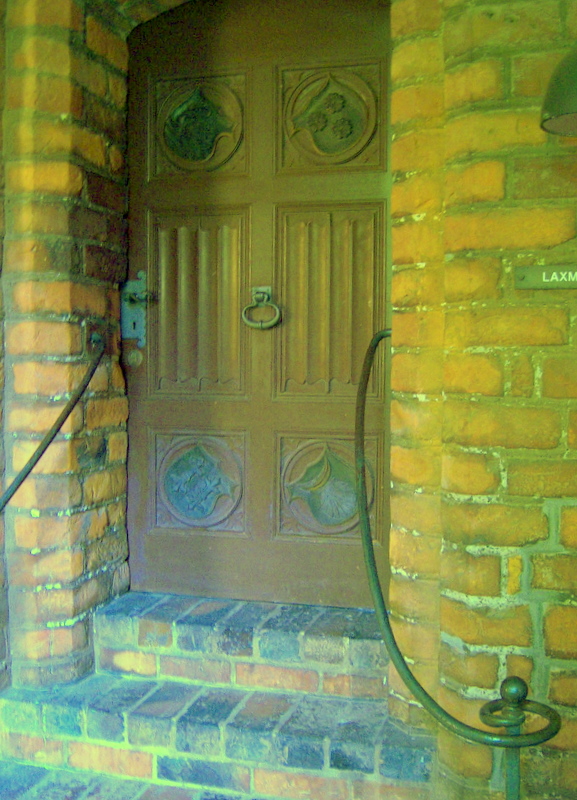 Entire door,orown symbols, Saint Mary's Helsingor DK; and Cloister. Mariakyrkan.
 Pulpit, Sancta Maria, Klosterkirka, Helsingor, DK.
  Ladies with child representing virtues; not just fashion bulges, to look at them. St. Mary's, Helsingor, DK Mariakyrkan.
 Patience; a virtue represented by a cowering, even pregnant lady, St. Mary's, Helsingor, DK Mariakyrkan.
 Worship Boxes; private rooms with their own windows to the church below, where the wealthy family could retire up the curved (also private) staircases, Sancta Maria, Klosterkirka, Helsingor, DK
 Weathy patron worship box, St. Mary's Klosterkirka, Helsingor Denmark
 Hamlet's Grove, Marienlyst Slot, Castle area, parkland, Helsingor DK
 Traditional gravesite (doubtful), historical Hamlet, park near Marienlyst Castle, Helsingor, DK
 Mythical creature as shown on back of marker, Hamlet alleged grave site, Marienlyst Slot park area, Helsingor DK,
 Mythical creature, front of marker Hamlet Grove, Maarienlyst Castle manor house park, Helsingor, DK. Front does not match back.
  St. Mary's Carmelite Cloister Church, Helsingor DK; Skt Mariae Klosterkirke. Monastery of Our Lady. Cloister garden.
  Boar's head at the Last Supper, St. Mary's Cloister Church, Helsingor DK. Also other scenes: flight into Egypt, Herod the baby-killer (no outside evidence for that?); a healing?
 Closeup. No mistaking. That's a boar's head at the Last Supper. Skt Mariae, Carmelite Cloister Church Helsingor DK
 ,Frescoes, St. Mary's Cloister Church, Helsingor DK. Judas and the kiss, sleeping disciples in the garden, cup pass from me, etc.
 Scourging, thorns, carrying the cross, crucifixion. Ceiling arch frescoes, Skt. Mariae, Klosterkirke, Helsingor DK, St. Mary's.
 .Burial marker, floor,Frederick II but not the King (at Roskilde); St. Mary's Klosterkirke, Helsingor, DK.
 ,,
,, Organ view, Buxtehude's. St. Mary's Cloister Church, Helsingor DK
 Ferry, Helsingborg, Sweden to Helsingor, Denmark
 Helsingor, Town (single tower); and Kronborg, Castle (multi-tower)

